
Meet the American chestnut
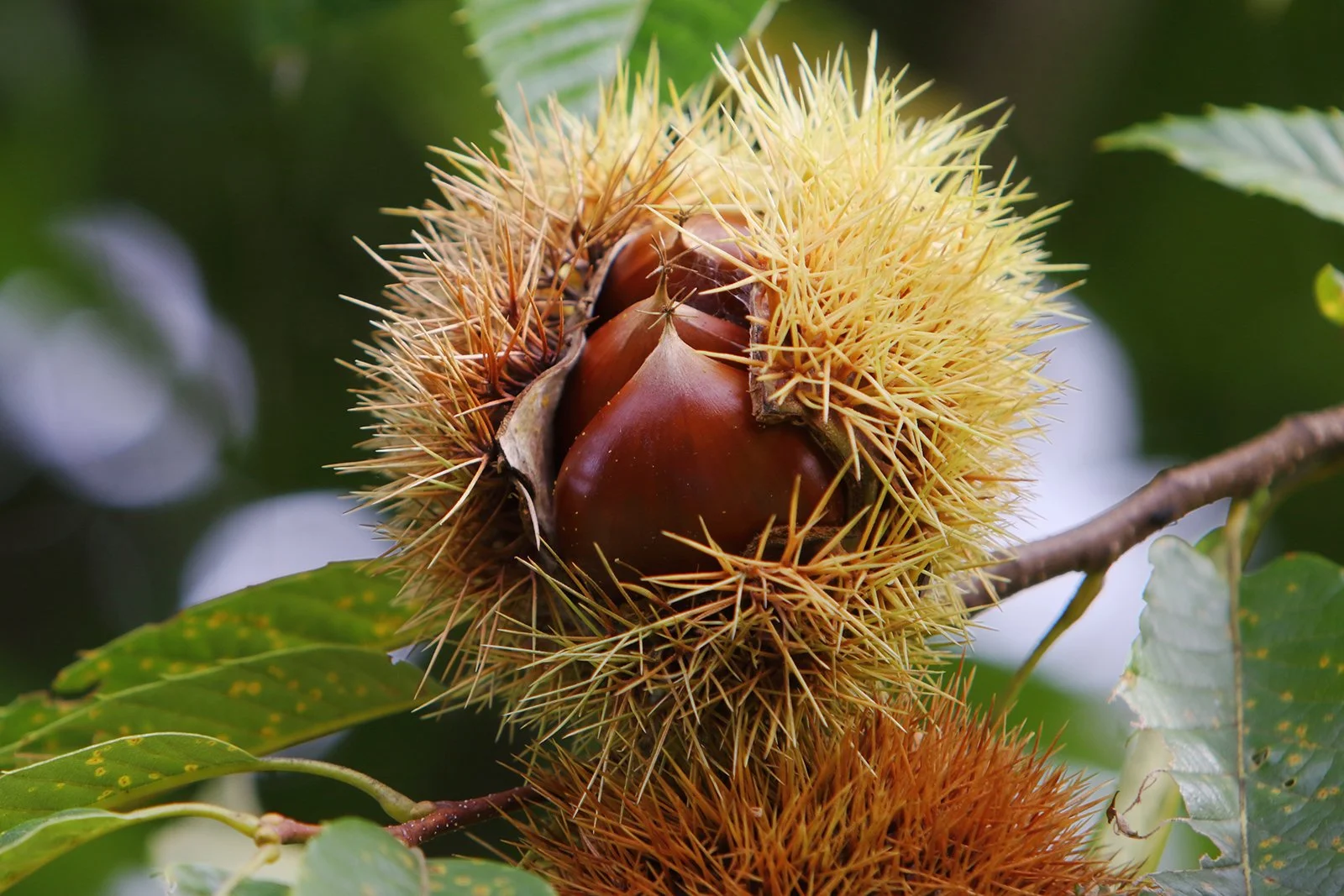
If ever a tree were worthy of legend, it is the American chestnut.
Once, billions of these giants stretched from Maine to the Gulf Coast. They were the "Redwoods of the East"—tall, straight, fast-growing, and nearly rot-resistant. In the early days of the republic, William Penn listed them among the most notable sights of the New World. Thomas Jefferson cultivated them at Monticello, and Henry David Thoreau roamed "boundless chestnut woods" to gather their harvest.
In the heat of an Appalachian summer, entire hillsides would turn creamy white in bloom, looking as if the mountains had been dusted with confectioners’ sugar.
The Pillar of American Life
The American chestnut wasn't just a tree; it was infrastructure, economy, and autumn joy all in one.
The Wood: Built the barns, homes, and fences that settled the frontier.
The Food: Its sweet, calorie-dense nuts fed families, livestock, and wildlife alike.
The Culture: Rural communities gathered the harvest by the wagonload, a seasonal heartbeat that sustained the region.
Then, the blight arrived.
The Invisible Invader
The fall of the American chestnut remains one of the most devastating ecological disasters in North American history.
In 1904—the same year my grandfather was born—a fungal pathogen called Cryphonectria parasitica was discovered on imported Asian chestnut trees at the Bronx Zoo. The American chestnut had no natural defenses. The fungus girdled the trees, forming cankers that choked off life-sustaining nutrients.
By the 1940s, while my grandfather was raising his children, the blight was moving through the eastern forests like wildfire. By mid-century, the "mighty" chestnut was gone. We have since watched similar tragedies strike elm and ash trees, but the fall of the American chestnut remains one of the most devastating ecological disasters in North American history.
Hope measured in tree rings
If the story ended there, it would be too heavy to tell.
But while the tree is "functionally extinct," it hasn't vanished. Its root systems still live underground, stubbornly sending up hopeful sprouts that the blight eventually strikes down again.
For over a century, a dedicated league of scientists, foresters, and dreamers has been trying to crack the code. Unlike research on mice, research on trees is slow. It is work measured in decades of controlled pollination, careful selection, and field trials.
You might ask: Why chase this ghost?
We do it because the chestnut was a keystone species. Wildlife depended on its reliable nut crops, and its rapid growth stabilized entire ecosystems. Bringing it back isn’t about nostalgia—it’s about repairing a broken thread in our ecological fabric.
Why It Matters
Today, there is a glimmer of light in test orchards.
Scientists are currently pursuing two main paths:
1. Backcross Breeding: Diluting the genetics of blight-resistant Chinese chestnuts over generations until the tree is roughly 94% American but retains its parent's immunity.
2. Transgenic Research: Inserting a specific wheat gene into the tree to help it detoxify the blight fungus.
Neither method is a "magic wand" that will instantly restore the forest to its previous glory. But it is progress.
I am about to plant chestnuts myself. I know I may never see them reach full maturity, but I feel this story in my bones. The fall of the American chestnut was a tragedy, but its return? That is a story of redemption I want to be part of.