Breaking ground
Growing up in Iowa, I watched my father turn the earth into a side hustle. With a Wheel Horse garden tractor and a steady hand, he spent his Spring evenings and weekends tilling gardens. My mother put an ad in the Penny Saver, took the calls, then made Dad’s schedule. I learned the secret geography of Cedar Rapids from the passenger seat of Dad’s pickup on the way to till gardens.
I always loved the look and feel of tilled soil. It was dark, rich, and heavy with the scent of a buried spring, just awaiting a handful of seeds and a rhythmic rain to jumpstart the season.
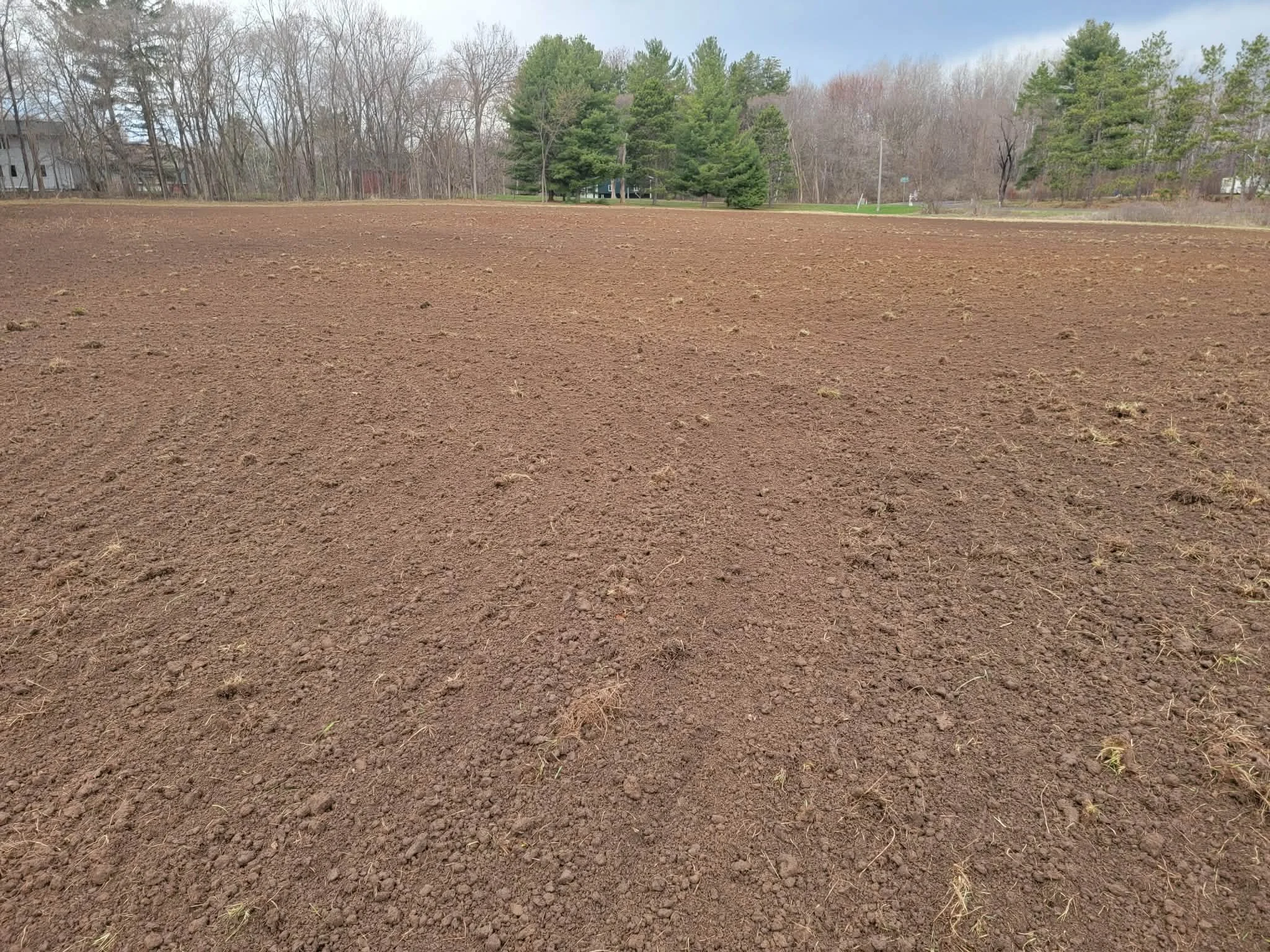
Fast forward to now, Spring 2026, and the four acres of pasture we’d just bought. We had a choice to make: how would we prepare this quiet earth for the arrival of chestnut seedlings?
I hadn’t been deep in the dirt for years, and tilling was the only option I knew. Well, I also knew farmers plowed their fields in the spring, but I didn’t yet understand the subtle hierarchy of the blade.
Our agroforestry expert, Katlyn from Canopy Farm Management, walked the fields with us last fall. She suggested disking the rows where the trees would take root. I nodded along, though I didn’t know what exactly that meant. I should have asked her.
I turned to AI to visualize the difference, and the picture became clear. Plowing is a total upheaval; it turns the earth over entirely, burying the ghosts of last year’s grasses and stalks—the "residue"—deep beneath the surface. Disking doesn’t go as deep. It can break up heavy clods left by the plow or prepare the soil on its own. Tilling is the final, finest touch.
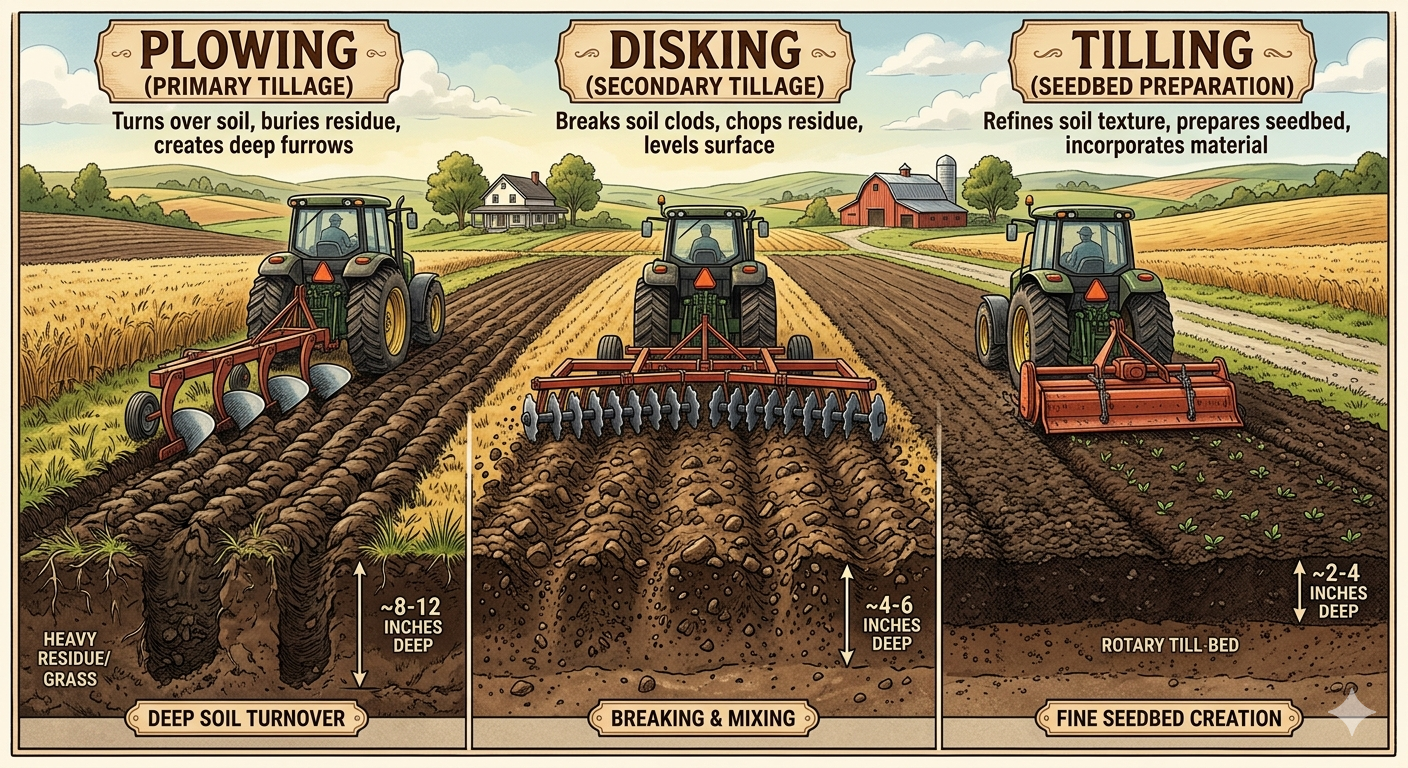
AI helped me see the differences between plowing, disking and tilling.
Farmer Tom lives down the hill from our future orchard; he’s our summer source for sweet corn. When we asked if he’d disk the land for us, he agreed to take a look.
Years of long grasses had bowed under the weight of winter snows, weaving a thick carpet over our land. As Tom rode his 4-wheeler over a constellation of molehills, he shook his head. To cut through this history, he told us, we’d better plow first, then disk the soil.
Plowing was once the gold standard of the American farm, but its crown has slipped a bit. It breaks up the soil’s deep architecture and leaves the land vulnerable to the wind and rain. In its place, no-till or low-till methods have gained a following, favoring the less intensive touch of the disk.
Plow and disk, or just disk? It’s a classic coffee-shop debate among farmers—balancing the need for a perfect seedbed with the long-term health of the soil. In this case, the pasture hadn’t been tilled for 25 years, and there was a lot sod to bust.
I nodded to Tom, ready to let the iron meet the earth. It was almost time to plant.